
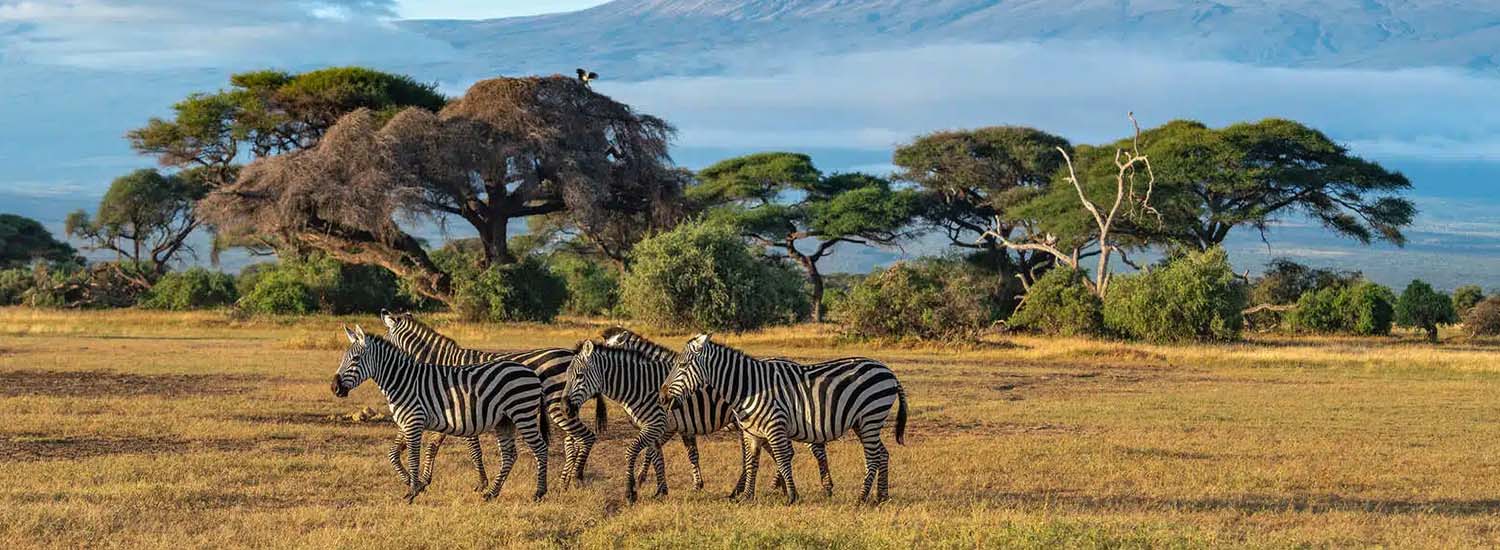
Lion Prides in Action
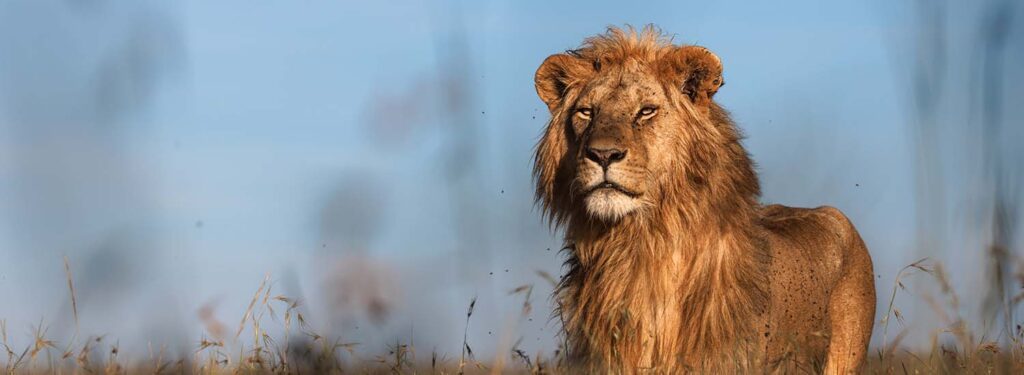
The Mara’s lion prides are famous worldwide. Lions are the most social of the big cats, and this makes them especially fascinating to observe. Pride is not just a group of animals resting together. It is a structured family system built around cooperation, territory, survival, and protection.
Some of the Mara’s best-known lion families occupy territories around Musiara Marsh, Paradise Plains, Rekero, and the Mara Triangle. The Marsh Pride, made famous through the BBC’s Big Cat Diary, has produced generations of dominant males and lionesses that continue to shape the ecosystem. Depending on seasonal movements and pride dynamics, guides may also track Paradise Pride or Rekero-associated lions within the reserve.
One of the most powerful behaviours you may witness is pride coordination. Lionesses move silently through grass, often spreading out to create pressure around potential prey. Their movement can feel almost invisible until the moment the hunt begins. One lioness may circle wide, another may wait low in the grass, and another may push the prey toward the ambush.
Even when a hunt does not succeed, watching the strategy unfold is unforgettable.
At sunrise, lions often reveal their softer side. You may see them grooming one another, rubbing heads, resting with cubs, or lying in warm light after a night of movement. These social moments show the emotional depth of pride in life and soften the image of Africa’s strongest predator.
Lion Behaviours You May See
- Pride grooming and head rubbing
- Lionesses coordinating a hunt
- Cubs nursing or playing
- Males scent marking territory
- Lions resting after a kill
- Pride members calling to one another
- Young males testing dominance
A well planned masai mara safari gives you time to observe these behaviours rather than simply ticking off a lion sighting.
Cheetahs Scanning from Termite Mounds
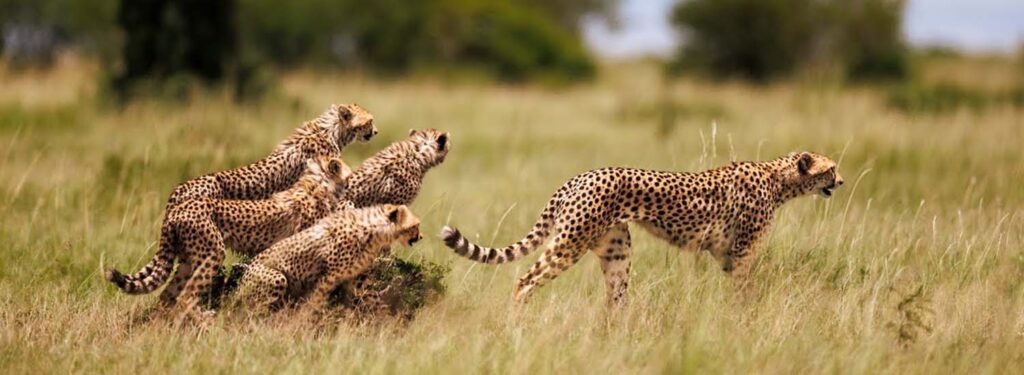
Cheetahs are the sprinters of the Mara, and their behaviour is shaped entirely by survival. Unlike lions, they cannot rely on strength or group power in the same way. Unlike leopards, they cannot drag heavy prey into trees. Their advantages are speed, eyesight, precision, and timing.
You will often spot cheetahs perched on elevated vantage points such as termite mounds, fallen logs, or slight rises in the landscape. This behaviour helps them scan the plains for both prey and danger. From these lookout points, they can watch gazelles, wildebeest calves, jackals, hyenas, lions, and other threats.
Masai Mara is one of the best places in Africa to observe wild cheetahs because several individuals and coalitions are well known to experienced guides. Visitors may hear names like Malaika, Siligi, or the famous Tano Bora coalition—a group of five male cheetahs that has become one of the most photographed predator coalitions in East Africa. These cheetahs are frequently seen hunting across the open plains of Topi Plains, Paradise Plains, and the Talek region, where excellent visibility creates outstanding wildlife viewing opportunities.
Their body language is subtle but thrilling. A cheetah preparing to hunt may lower its shoulders, fix its gaze, flatten its body, twitch its tail, and begin a slow stalk. The landscape becomes quiet. Then, in seconds, stillness turns into explosive speed.
Even if you do not witness the full chase, watching a cheetah prepare is breathtaking. It reveals patience before power.
Cheetah Behaviours You May See
- Surveying the plains before a hunt
- Stalking Thomson’s gazelles
- Mother cheetah guiding cubs
- Resting in shade after a chase
- Scent marking
- Changing direction during pursuit
- Watching for lions and hyenas
For wildlife photographers, cheetahs are among the most rewarding subjects during a Masai Mara safari because their movements are elegant, open, and visually clean against the plains.
Leopards Being Leopards
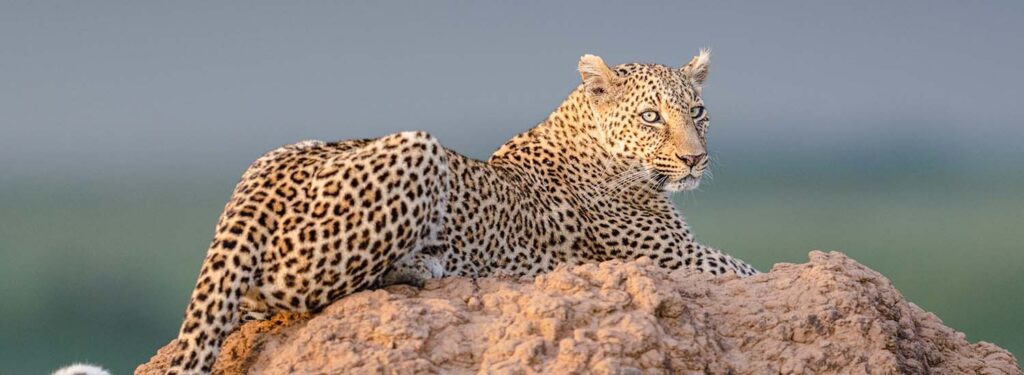
The Mara’s leopards are elusive, solitary, and often theatrical in their movements. They are not always easy to find, but when you do see one, the sighting often feels deeply special.
What you are most likely to see is a leopard lounging on an acacia branch, its tail hanging gracefully like a ribbon. These cats are expert climbers. Trees give them safety, shade, a lookout point, and sometimes a dining table.
Leopard sightings in Masai Mara often centre around riverine forests along the Talek River, Olare Orok River, and the Mara River. Experienced guides frequently recognize individual leopards by their spot patterns, with famous residents such as Fig and Bahati becoming favourites among photographers over the years.
One of the most iconic leopard behaviours is the carcass lift. A leopard can drag prey into a tree to keep it safe from lions, hyenas, and jackals. This behaviour is a display of strength, strategy, and survival intelligence.
Leopards are also masters of concealment. They may disappear into riverine thickets even when you know they are nearby. Their spotted coat blends beautifully with leaves, shadows, bark, and grass.
Leopard Behaviours You May See
- Resting on acacia branches
- Dragging prey into trees
- Stalking through thickets
- Moving at dawn or dusk
- Grooming after a meal
- Watching prey from cover
- Descending from trees with silent precision
A private safari Kenya experience can improve your leopard viewing because your guide can spend more time searching patiently in the right habitats.
Cubs at Play
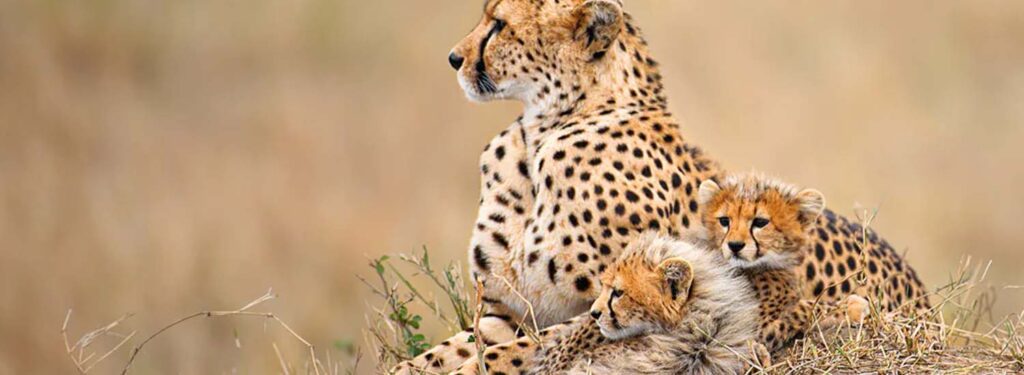
One of Mara’s greatest joys is watching big cat cubs. Lion cubs, cheetah cubs, and occasionally leopard cubs can turn a safari drive into a scene of pure wonder.
Play is not random. It is training for adulthood. Cubs stalk, chase, pounce, bite, tumble, and wrestle to build coordination, strength, confidence, and social awareness.
Lion cubs often play around pride members, climbing over adults, batting tails, and chasing siblings. Cheetah cubs may follow their mother closely, learning when to move, when to hide, and how to read danger. Leopard cubs are more secretive, usually hidden carefully by their mother in thick cover or rocky areas.
For families on safari, cub sightings are often the most memorable part of the journey. They are emotional, photogenic, and easy for children to connect with.
Cub Behaviours You May See
- Play fighting
- Stalking siblings
- Pouncing practice
- Nursing
- Following mothers
- Clumsy climbing
- Curious watching from grass
The best African safari for families often includes destinations like the Mara because the wildlife experiences are both dramatic and deeply engaging.
Predator–Prey Standoffs
Across the plains, you may witness tense standoffs where lions face buffalo, cheetahs watch gazelles, or leopards wait patiently for the perfect moment. These encounters are the essence of the Mara: raw, real, and unforgettable.
Not every standoff becomes a chase. In fact, many big cat encounters are about decision making. Predators must conserve energy. Prey must assess risk. A lion may watch buffalo for a long time before deciding the danger is too great. A cheetah may abandon a hunt if gazelles notice it too early. A leopard may wait in complete stillness until the light fades.
For travellers, these quiet moments are just as powerful as action scenes. They show that survival is not only about speed or strength. It is about patience, judgement, and timing.
Standoffs You May Witness
- Lion pride watching buffalo
- Cheetah stalking gazelle
- Hyenas approaching a lion kill
- Leopard waiting near an impala trail
- Jackals testing cheetah cub safety
- Buffalo confronting lions
- Vultures gathering near predator activity
A luxury Kenya safari package with a strong guide allows you to read these scenes better and understand what is happening beneath the surface.
Best Time To Visit Masai Mara For Big Cats
Big cats can be seen in the Mara throughout the year, but the safari experience changes by season.
July To October
This is the Great Migration season, when wildebeest and zebra herds move through the ecosystem. A masai mara great migration safari can increase predator activity because prey numbers rise dramatically. This is also a popular period, so early planning is important.
January To March
This can be excellent for predator viewing, with clearer grass in many areas and strong general wildlife movement. It is a good time for travellers who want big cats without peak migration crowds.
April To June
The green season can bring beautiful landscapes, fewer vehicles, dramatic skies, and strong photography conditions. Some roads may be more challenging depending on rain.
November To December
Short rains refresh the plains. This can be a lovely period for birdlife, scenery, and quieter safari experiences.
The best time to visit Masai Mara depends on whether your priority is migration drama, big cat photography, fewer crowds, or a more private luxury safari feel.
Where Big Cat Sightings Are Best In The Mara
The Masai Mara National Reserve is the classic choice for first-time visitors. It offers open plains, excellent wildlife density, and access to famous game viewing areas. Areas such as Musiara Marsh are particularly renowned for the famous Marsh Pride, while Paradise Plains regularly rewards visitors with lion prides, cheetahs, and seasonal Great Migration action. The Talek region is another hotspot, especially for cheetah sightings and elusive leopards that favour the nearby riverine habitats.
The Mara Triangle is known for beautiful landscapes, strong wildlife, and migration-related activity during peak months. Its lower vehicle density, healthy buffalo herds, and resident lion prides make it one of the best areas for extended predator sightings and dramatic wildlife encounters.
Private conservancies around the Mara, including Olare Motorogi Conservancy and Mara Naboisho Conservancy, offer a more exclusive safari style, often with fewer vehicles and high-quality guiding. These conservancies are well known for excellent leopard sightings, resident lion territories, and regular cheetah encounters. Depending on conservancy rules, they may also offer activities like night drives, walking safaris, and off-road game viewing, allowing guides to position guests for exceptional wildlife experiences.
A Masai Mara fly-in safari can be ideal for luxury travellers because it reduces road travel time and places you closer to prime wildlife areas quickly, whether you’re staying near Musiara Marsh, Paradise Plains, the Mara Triangle, or one of the private conservancies.
Why A Private Safari Helps With Big Cat Viewing
A private safari gives you control over pace, timing, and focus. If big cats are your main interest, your guide can shape the game drives around predator territories, fresh tracks, recent sightings, and the best light.
In a shared vehicle, everyone may have different priorities. One guest may want birds, another may want elephants, another may want to return early. In a private safari, the experience can be built around your interests.
Private safari Kenya planning is especially useful for:
- Photographers
- Honeymooners
- Families
- First time safari guests
- Senior travellers
- Wildlife focused travellers
- Guests who want flexible game drives
For big cat behaviour, patience is everything. A private vehicle allows you to wait longer when the guide reads that something may happen.