
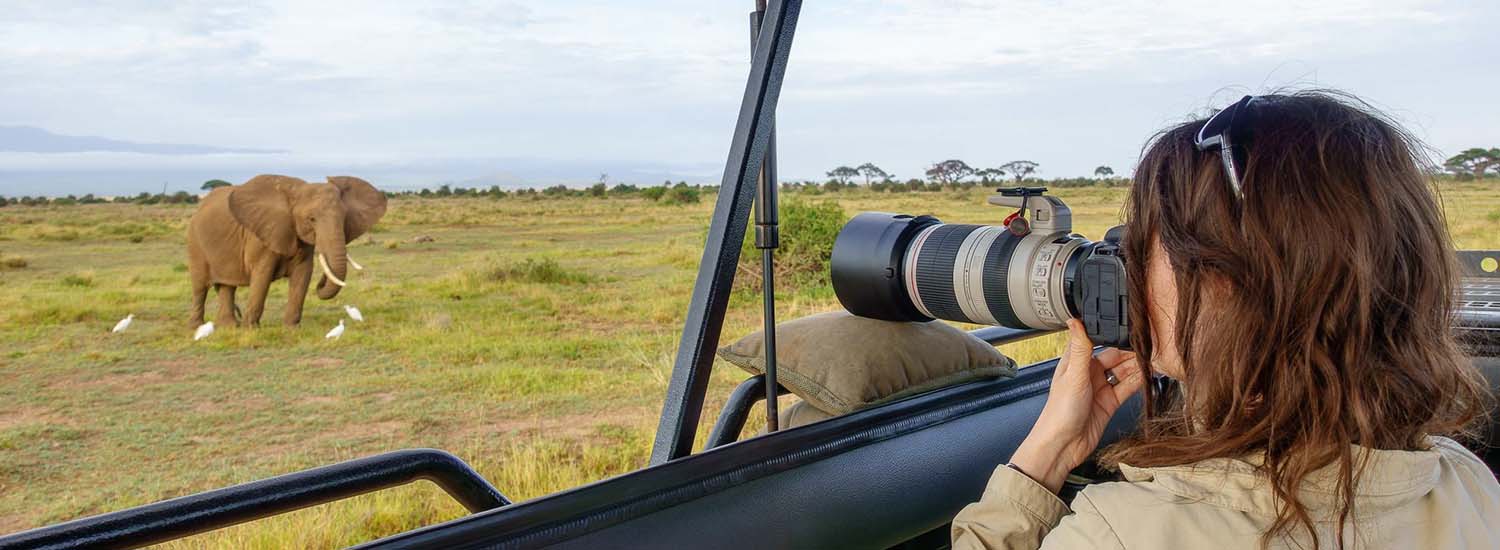
Africa is not just a destination. It is a living canvas. From endless golden savannahs to misty volcanoes, crimson deserts, mirror like lakes, ancient coastal towns, and wildlife rich plains, the continent offers scenes that feel created for photographers.
A well planned African safari gives photographers more than wildlife sightings. It gives light, movement, emotion, silence, scale, and story. One morning can begin with elephant silhouettes beneath Kilimanjaro. The next can place you beside a lion pride in the Masai Mara or watching flamingos turn a lake into a moving field of pink.
This guide is designed for wildlife photographers, nature lovers, travel creators, honeymooners, families, and adventure seekers who want their lens to capture more than images. The goal is to capture memory, mood, and meaning.
Why Africa is Different for Safari Photography
What makes Africa different is the quality of light, the openness of the landscapes, the proximity to wildlife, and the sense that every sunrise and sunset creates a new scene.
In Kenya and Tanzania, photography is not limited to animals. You can frame big cats in golden grass, elephants against volcanic mountains, flamingos across soda lakes, Maasai culture in vivid color, ancient Swahili streets, and turquoise islands of Zanzibar and Mombasa after days in the bush.
For anyone planning a first time safari in Africa, the biggest advantage of Kenya and Tanzania is variety. A single route can include the Masai Mara, Serengeti National Park, Ngorongoro Crater, Amboseli, Tarangire, Lake Nakuru, Lake Natron, and Zanzibar or Diani Beach. This makes the region ideal for a luxury African safari that balances wildlife, landscapes, culture, and coast.
How to Use This Photography Guide
The locations below are grouped into five photography categories:
- Wildlife photography
- Landscape photography
- Lake and birdlife photography
- Cultural and lifestyle photography
- Coastal and marine photography
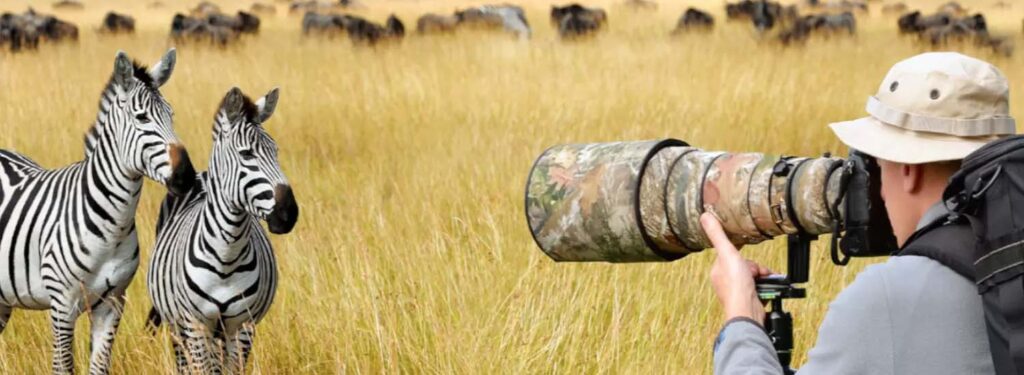
For the best results, plan your shoots around Golden Hour, which means sunrise and sunset. This is when warm light, long shadows, dust, and movement create cinematic frames. Blue Hour, just before sunrise and after sunset, is useful for moody skies, lodge photography, silhouettes, and low light landscape scenes.
Essential Camera Gear for a Safari Photographer
- Carry a 24 to 70mm lens for people, camps, landscapes, and lifestyle frames.
- Carry a 70 to 200mm lens for portraits, closer wildlife, and compressed landscapes.
- Carry a 100 to 400mm or 150 to 600mm lens for big cats, birds, and distant wildlife.
- Use bean bags instead of tripods inside safari vehicles.
- Carry extra batteries and memory cards because safari drives are long.
- Use dust protection for camera bodies and lenses.
- Respect wildlife distance, park rules, and local communities.
- Check drone regulations before travel because rules vary by country, park, and conservation area.
Best African Safari Photography Hotspots for Wildlife
Masai Mara, Kenya
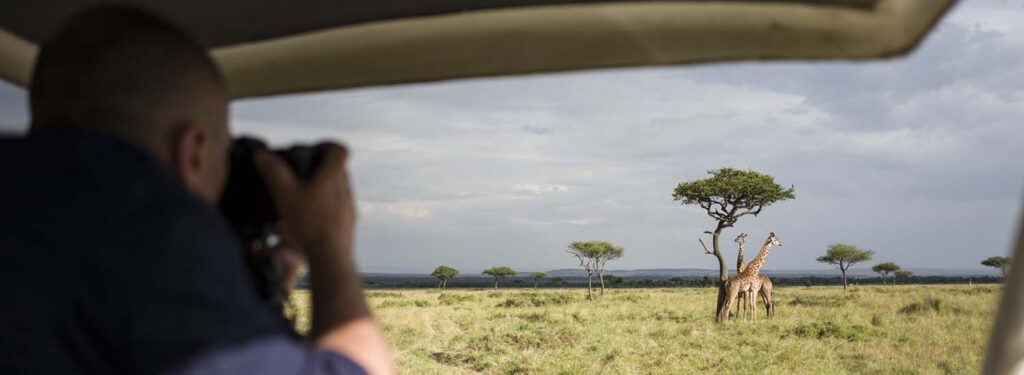
The Masai Mara is one of the most powerful wildlife photography destinations in Africa. It is famous for open savannahs, big cats, dramatic skies, and the Great Migration season. For photographers, the magic of the Mara is visibility. The grasslands allow clean compositions, strong subject isolation, and dramatic predator scenes.
A masai mara safari is especially rewarding for lions, cheetahs, leopards, elephants, buffalo, giraffes, hyenas, and wildebeest. During migration months, river crossings can deliver some of the most emotional wildlife frames in the world. Even outside migration, the Mara remains one of the best year round locations for predator photography.
Best shots to plan:
- Lion pride at sunrise
- Cheetah on termite mound
- Wildebeest crossing
- Hot air balloon over plains
- Golden grass portraits
Serengeti National Park, Tanzania
Serengeti National Park is the visual definition of endless wilderness. The plains, kopjes, acacia silhouettes, and seasonal migration routes make it a dream location for long lens and wide angle photography.
A serengeti safari is ideal for photographers who want scale. You can photograph herds stretching across the horizon, lions resting on granite kopje, leopards in riverine woodland, and cheetahs moving through open plains. The Serengeti also connects beautifully with Ngorongoro and Tarangire, making it central to many Tanzania safari packages.
Best shots to plan:
- Wildebeest herds across open plains
- Lion on kopje
- Cheetah chase sequence
- Zebra patterns
- Sunset silhouettes
Ngorongoro Crater, Tanzania
Ngorongoro Crater offers one of the most concentrated wildlife photography experiences in East Africa. Its natural bowl shape creates a dramatic setting with grasslands, lakes, forests, and crater walls in the background.
For photographers, the crater is useful because wildlife density is high and distances between sightings can be shorter than in larger parks. It is an excellent location for Big Five safari animals, especially lions, buffalo, elephants, and rhinos.
Best shots to plan:
- Rhino in open grassland
- Lion pride with crater wall background
- Flamingos on soda lake
- Elephants near forest edge
- Wide crater landscape from viewpoint
Amboseli, Kenya
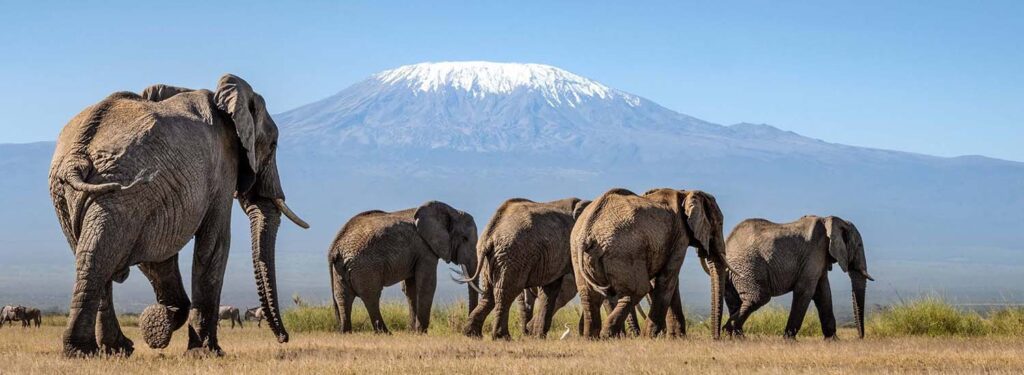
Amboseli is famous for its elephants and views of Mount Kilimanjaro. It is one of the best places in Africa to create iconic elephant images with mountain backdrops.
The best photography happens early in the morning when Kilimanjaro is clearer and wildlife is active. Dust, marshes, open plains, and elephant family groups create emotional and elegant compositions. For a kenya safari focused on elephant photography, Amboseli should be a priority.
Best shots to plan:
- Elephants beneath Kilimanjaro
- Elephant family crossing dusty plains
- Marsh birdlife
- Sunrise silhouettes
- Wide angle safari landscapes
Tarangire National Park, Tanzania
Tarangire National Park is one of Tanzania’s most rewarding safari destinations, celebrated for its impressive elephant herds, ancient baobab trees, and diverse wildlife. The park offers a peaceful atmosphere compared to some of the country’s busier reserves, making it an excellent addition to luxury Tanzania safari packages. During the dry season, animals gather around the Tarangire River, creating exceptional wildlife viewing and unforgettable safari experiences.
Best shots to plan:
- Elephants under baobab trees
- Dusty dry season scenes
- Giraffes against warm light
- Birdlife near water
- Wide baobab landscapes
Lake Naivasha
Lake Naivasha is one of Kenya’s most scenic freshwater lakes and a favorite destination for bird and wildlife photographers. Surrounded by acacia forests, papyrus-lined shores, and dramatic Rift Valley landscapes, the lake offers a peaceful contrast to the traditional safari experience.
Boat safaris provide excellent opportunities to photograph hippos, fish eagles, cormorants, kingfishers, and reflections on calm waters. Nearby attractions such as Crescent Island and Hell’s Gate National Park add diversity to photographic compositions, making Lake Naivasha an ideal stop on many Kenya safari itineraries.
Best shots to plan:
- Hippos in morning mist
- African fish eagle in flight
- Boat safari reflections
- Crescent Island wildlife
- Golden hour lake landscapes
Lake Nakuru, Kenya
Lake Nakuru is a strong photography location for flamingos, rhinos, lake reflections, and wooded scenery. It adds variety to kenya safari packages because it breaks the rhythm of open plains with water, birdlife, and forest edges.
The lake is especially useful for photographers who want color contrast. Flamingos, pelicans, acacia trees, rhinos, and lake mist create a different mood from the Mara or Amboseli.
Best shots to plan:
- Flamingos in soft light
- White rhino portraits
- Bird reflections
- Forest edge wildlife
- Wide lake scenes
Lake Manyara, Tanzania
Lake Manyara is known for forest, lake views, elephants, birds, and the possibility of tree climbing lions. While wildlife sightings can vary, the park is visually rich because it combines groundwater forest, open lake edges, and escarpment views.
It is a good addition to a tanzania safari route for photographers who want diversity in a short distance.
Best shots to plan:
- Elephants in forest
- Tree climbing lion if sighted
- Birdlife near lake
- Forest road frames
- Escarpment landscapes
Tsavo East, Kenya
Tsavo East is a dramatic location for red dust elephants and wide wilderness scenes. The earth tones are different from the Mara, giving photographers a raw and cinematic palette.
This destination works well for photographers who enjoy minimal compositions, dust trails, and strong color contrast. Red elephants against blue skies or open terrain are signature Tsavo frames.
Best shots to plan:
- Red dust elephant herds
- Minimalist wildlife in open space
- Dusty sunset scenes
- Giraffes in dry country
- Long road safari compositions
Samburu, Kenya
Samburu National Reserve offers a completely different photographic experience from the Masai Mara. The reserve is known for its rugged landscapes, riverine forests, dramatic light, and rare northern species often referred to as the “Samburu Special Five” — Grevy’s zebra, reticulated giraffe, Somali ostrich, Beisa oryx, and gerenuk.
The Ewaso Ng’iro River attracts wildlife throughout the year, creating excellent opportunities for action photography. Samburu’s arid terrain, rocky outcrops, and fewer visitors make it one of Kenya’s most rewarding destinations for photographers seeking unique wildlife and authentic wilderness scenes.
Best shots to plan:
- Reticulated giraffe portraits
- Grevy’s zebra against dry landscapes
- Elephants along the Ewaso Ng’iro River
Gerenuk standing on hind legs - Dramatic sunset silhouettes
Nyerere National Park, Tanzania
Formerly part of the Selous Game Reserve, Nyerere is ideal for photographers who want a river based safari experience. The Rufiji River adds reflection, water action, crocodiles, hippos, birds, and sunset scenes.
Nyerere is also valuable because it feels less crowded than the northern circuit. For private safari Tanzania experiences, this region can deliver a quieter, more immersive photographic rhythm.
Best shots to plan:
- Hippos in river light
- Crocodiles on banks
- Boat safari silhouettes
- African wild dogs if sighted
- Golden river sunsets
Gombe & Mahale, Tanzania
Gombe Stream National Park and Mahale Mountains National Park offer some of Africa’s most extraordinary primate photography experiences. Located along the shores of Lake Tanganyika, these remote destinations are famous for wild chimpanzee tracking in lush tropical forests.
Unlike traditional safari photography, Gombe and Mahale focus on intimate wildlife storytelling. Photographers can capture chimpanzees displaying social behavior, forest interactions, and emotional expressions in their natural habitat. The combination of dense rainforest, mountain scenery, and crystal-clear lake views creates a unique photographic setting rarely found elsewhere in Africa.
Best shots to plan:
- Chimpanzees in natural forest habitat
- Primate interaction and behavior
- Lake Tanganyika landscapes
- Forest trails and rainforest scenes
- Sunset views over the lake
Best African Safari Photography Hotspots for Landscapes
Mount Kilimanjaro Views
Mount Kilimanjaro can be photographed from Amboseli in Kenya and from areas around Moshi in Tanzania. The mountain creates one of Africa’s most recognizable backdrops.
For wildlife photographers, the strongest compositions come when elephants, giraffes, or plains wildlife move across the foreground. Early morning is usually the best time because the mountain is more likely to be visible.
The Great Rift Valley, Kenya
The Great Rift Valley gives photographers scale, geology, lakes, escarpments, and sweeping viewpoints. It works well as a transition between Nairobi, Lake Naivasha, Lake Nakuru, and the Masai Mara.
For travel creators, this region is useful for establishing shots, road trip storytelling, and landscape sequences that connect the safari route.
Ol Doinyo Lengai, Tanzania
Ol Doinyo Lengai, often called the Mountain of God by the Maasai, is one of Tanzania’s most striking volcanic landscapes. It works best for photographers who want dramatic terrain, remote scenery, and a raw geological mood.
This is not a standard wildlife location. It is best included for photographers who want landscape storytelling and a more adventurous tanzania safari extension.
Shompole and Lake Magadi, Kenya
Shompole and Magadi are underrated gems for pink lakes, reflections, salt textures, flamingos, and abstract landscape photography. These locations are ideal for photographers who want something different from classic wildlife frames.
The light here can be intense, so sunrise and sunset are the best times for color control and softer contrast.
Chyulu Hills, Kenya
Chyulu Hills offers misty landscapes, cloud forest, lava tubes, rolling green slopes, and views toward Kilimanjaro. It is ideal for photographers who want atmosphere.
This region adds a softer, more cinematic layer to a kenya safari, especially for luxury travelers who appreciate wilderness, privacy, and landscape beauty.
Best Lake and River Photography Hotspots
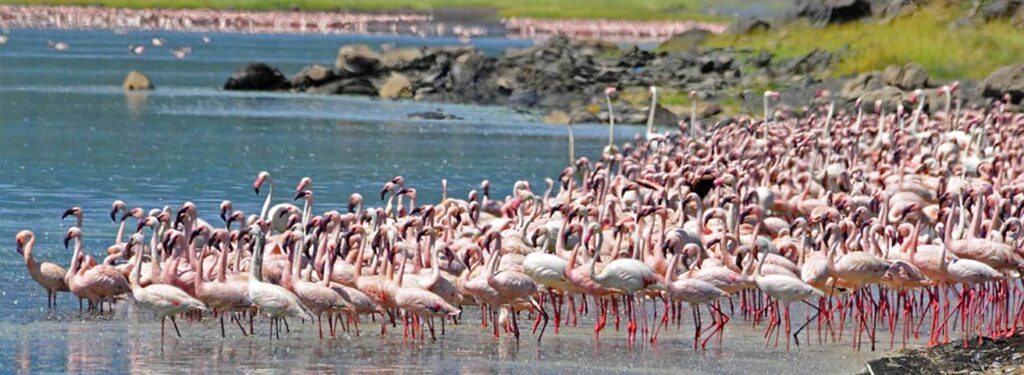
Lake Naivasha, Kenya
Lake Naivasha is excellent for misty mornings, hippos, fishermen, birds, and boat based photography. It is also a practical stop between Nairobi and other safari regions.
Early morning is the strongest time to shoot. Mist on the water, backlit birds, and quiet lake movement create peaceful contrast after high action wildlife drives.
Lake Bogoria, Kenya
Lake Bogoria is known for flamingos, steam, hot springs, and dramatic lake color. It is one of the best places for abstract bird photography and landscape patterns.
Photographers should plan around soft light because midday glare can be harsh on water.
Lake Natron, Tanzania
Lake Natron is one of the most surreal photography locations in East Africa. Its red and pink tones, salt patterns, reflections, flamingos, and views of Ol Doinyo Lengai make it visually unique.
This is a strong addition for photographers building a distinctive portfolio beyond standard safari scenes. It pairs well with Serengeti and Ngorongoro routes when travel time is planned properly.
Rufiji River, Tanzania
The Rufiji River is the heart of Nyerere photography. Water changes the entire rhythm of a safari. Instead of only game drives, photographers can shoot from boats, giving lower angles, reflections, and sunset silhouettes.
It is a strong choice for birders, slow travel photographers, and guests who want private safari Tanzania experiences away from busier routes.
Cultural and Lifestyle Photography Hotspots
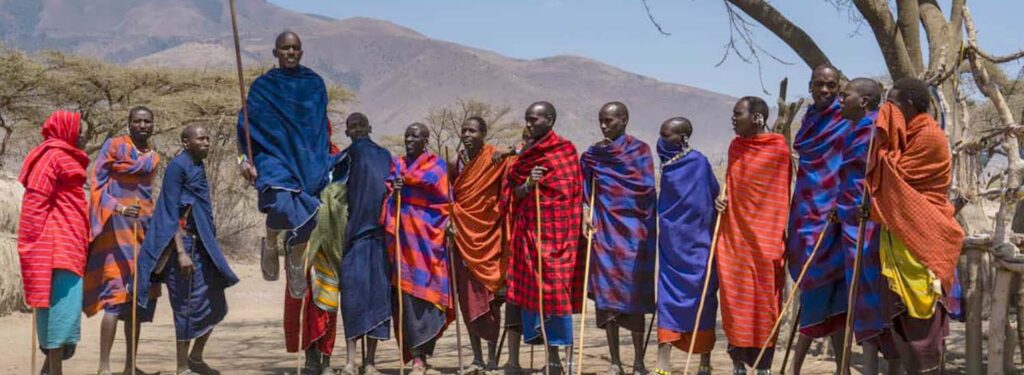
Maasai Villages, Kenya and Tanzania
Maasai cultural photography can be powerful when done respectfully. Colorful attire, beadwork, ceremonies, pastoral life, and village settings offer rich storytelling opportunities.
The key is consent. Scarface Pride recommends planned, ethical cultural visits where communities are respected, permissions are clear, and photography never feels intrusive.
Hadzabe Community, Lake Eyasi, Tanzania
The Hadzabe near Lake Eyasi offer rare cultural storytelling opportunities. Their lifestyle, hunting traditions, and relationship with the land create deeply human frames.
This experience should be approached with sensitivity and guided context. It is best for photographers who value documentary style work, not staged images.
Lamu Old Town, Kenya
Lamu adds heritage, architecture, coastal rhythm, and Swahili culture to a safari photography route. Carved doors, narrow lanes, dhows, donkeys, coral stone walls, and warm coastal light create an entirely different visual world.
For photographers planning a kenya safari and beach holiday, Lamu is a beautiful alternative to a simple beach ending.
Coastal and Marine Photography Hotspots
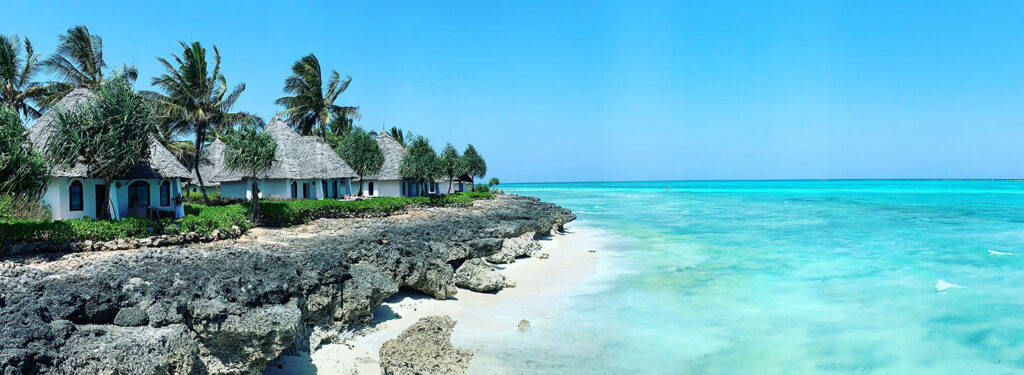
Zanzibar, Tanzania
Zanzibar is perfect after a Tanzania safari. It offers turquoise water, spice farms, Stone Town architecture, dhow sunsets, coral beaches, and cultural details.
A tanzania safari and Zanzibar combination is especially strong for honeymooners, families, and photographers who want both wildlife and coastal storytelling in one journey.
Diani Beach and Wasini Island, Kenya
Diani Beach and Wasini Island bring white sand, marine life, coastal villages, boats, palms, and underwater photography opportunities. This is a strong finish after Masai Mara, Amboseli, or Tsavo.
For guests considering kenya safari and beach holiday options, Diani gives a relaxed and photogenic coastal ending without leaving Kenya.
Suggested 12 Day Kenya and Tanzania Photography Route
Day 1–3: Masai Mara
Shoot big cats, open plains, predator action, migration scenes if in season, and golden hour landscapes.
Day 4: Lake Naivasha and Hell’s Gate
Capture misty lake scenes, hippos, birds, cliffs, gorges, and adventure style frames.
Day 5: Amboseli
Focus on elephants, Kilimanjaro views, dust, marshes, and sunrise silhouettes.
Day 6–8: Serengeti National Park and Ngorongoro Crater
Photograph the Great Migration route, kopjes, lions, cheetahs, crater wildlife, and wide ecosystem scenes.
Day 9: Tarangire and Lake Manyara
Add baobabs, elephants, forest scenery, birdlife, and lake views.
Day 10: Lake Natron or Lake Eyasi
Choose Lake Natron for surreal landscapes and flamingos. Choose Lake Eyasi for respectful cultural storytelling.
Day 11–12: Zanzibar, Diani, or Lamu
End with coastal photography, architecture, marine color, dhow sunsets, and beach relaxation.
This route gives the perfect balance of wildlife, landscapes, culture, and coast. It also works well for travelers comparing Kenya and Tanzania safari packages because it connects the most photogenic regions in one structured journey.
Best Time for an African Safari Photography Trip
The best time depends on the kind of images you want.
July to October
This is one of the strongest periods for the Great Migration, dry season wildlife viewing, clearer skies, and predator photography. It is also a popular period for masai mara great migration safari planning.
January to March
This is excellent for calving season in the southern Serengeti and Ndutu region. It is a powerful time for newborn animals, predator activity, soft light, and dramatic wildlife behavior.
November to December
Short rains can create lush landscapes, dramatic skies, fewer crowds, and rich color. This period is excellent for photographers who do not want only dry season tones.
April to May
This is the green season in many regions. Some roads can be challenging and some camps may close, but the landscapes can be beautiful, with moody skies and fewer vehicles.
If photography is the main goal, the best time to visit Kenya for safari may differ from the best time to visit Tanzania for safari depending on whether you want river crossings, calving season, birdlife, or landscape drama.
Kenya Safari Photography Versus Tanzania Safari Photography
A kenya safari is excellent for open grassland photography, high predator visibility, elephants with Kilimanjaro, Rift Valley lakes, and beach extensions through Diani or Lamu.
A tanzania safari is excellent for vast ecosystem photography, Serengeti migration routes, Ngorongoro wildlife density, Tarangire elephants, Lake Natron landscapes, and Zanzibar extensions.
For many photographers, the strongest solution is not choosing one country over the other. It is designing one intelligent route using kenya safari packages and tanzania safari packages together, based on season, light, wildlife movement, and your preferred visual story.
Why Choose a Curated Photography Safari?
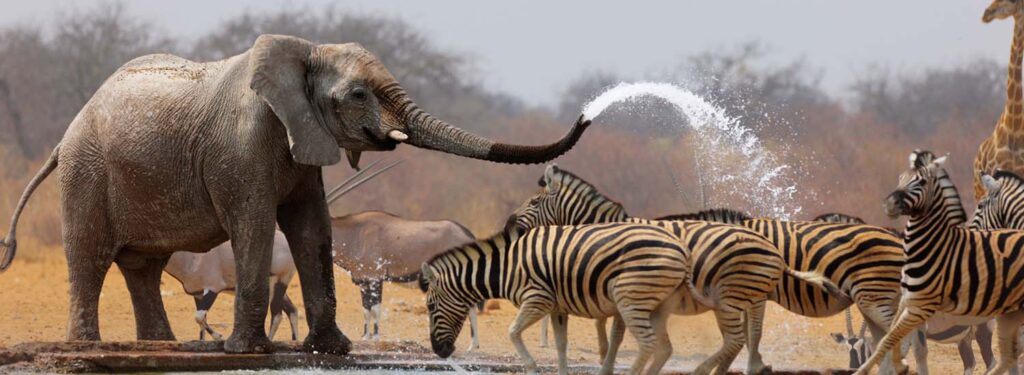
A photography focused African safari goes beyond basic sightseeing. Standard itineraries often chase sightings. A photography itinerary works differently. It considers light direction, vehicle position, subject behavior, patience, lens needs, and timing.
With Scarface Pride, you can plan:
- Custom photography routes
- Sunrise and sunset game drives
- Private vehicles designed for shooting
- Expert trackers and photography aware guides
- Flexible pacing for light and behavior
- Access to exclusive golden hour locations
- Great Migration routes based on herd movement
- Luxury camps selected for location and photographic value
For serious photographers, private vehicles matter. They allow you to wait longer, change position carefully, avoid rushed sightings, and shoot from better angles. This is especially important in the Masai Mara, Serengeti, Amboseli, Ngorongoro, and Tarangire.
Ethical Safari Photography Guidelines
Powerful wildlife photography should never come at the cost of wildlife comfort or community dignity.
- Keep safe distance from animals.
- Do not pressure guides to move too close.
- Avoid flash with wildlife at night unless permitted.
- Never block animal movement.
- Do not shout or bait animals.
- Ask permission before photographing people.
- Support community led cultural visits.
- Follow park rules and guide instructions.
The best safari images come from patience, not pressure.
FAQ
What is the best African safari destination for photography?
The Masai Mara, Serengeti National Park, Ngorongoro Crater, Amboseli, Tarangire, and Lake Nakuru are among the strongest destinations for photography because they combine wildlife density, open landscapes, dramatic light, and strong subject variety.
Is Kenya or Tanzania better for safari photography?
Kenya is excellent for Masai Mara big cats, Amboseli elephants, Rift Valley lakes, and coastal extensions. Tanzania is excellent for Serengeti scale, Ngorongoro wildlife density, Tarangire elephants, Lake Natron landscapes, and Zanzibar. Many photographers get the best results by combining both.
What lens should I carry for an African safari?
A 24 to 70mm, 70 to 200mm, and 100 to 400mm lens combination works well for most safari photographers. Birders and serious wildlife photographers may prefer a longer prime or a 150 to 600mm lens.
What is the best time for a photography safari in Kenya and Tanzania?
July to October is excellent for dry season wildlife and migration scenes. January to March is strong for Serengeti calving season. November and December offer lush landscapes, dramatic skies, and fewer crowds.
Do I need a private vehicle for safari photography?
A private vehicle is highly recommended for photographers. It gives better control over timing, positioning, waiting, and shooting angles. It also avoids rushing from one sighting to another.
Can Scarface Pride plan a photography focused safari?
Yes. Scarface Pride can curate a custom african safari around your photography goals, preferred destinations, travel season, skill level, luxury standards, and dream shots.
Can I combine safari photography with a beach holiday?
Yes. Zanzibar, Diani Beach, Wasini Island, and Lamu are excellent coastal endings after Kenya or Tanzania safari routes.
Ready to Turn Your Lens Toward Africa?
Your next iconic frame may be waiting in the Mara grasslands, beneath Kilimanjaro, across the Serengeti plains, inside Ngorongoro Crater, or along the turquoise coast of Zanzibar.
Let Scarface Pride curate a custom African safari photography journey built around your vision, timing, skill level, and dream shots.
Plan your Kenya and Tanzania photography safari with Scarface Pride today.