
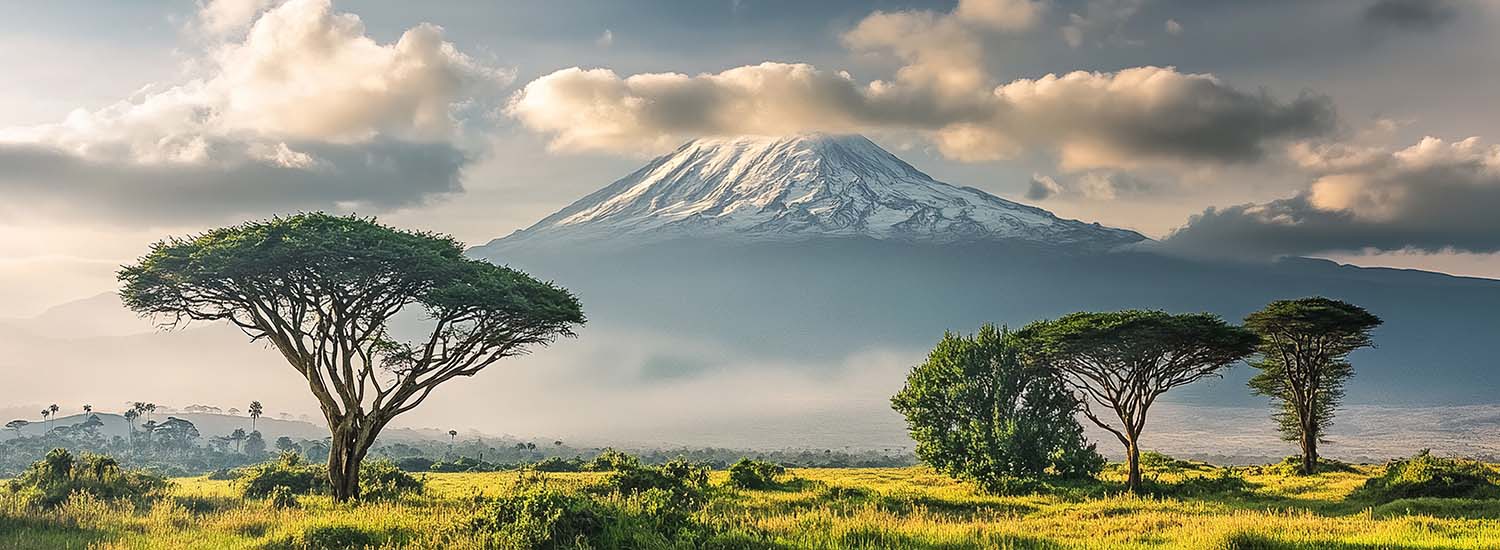
Start With The Summit: Climbing Mount Kilimanjaro
Kilimanjaro is often called a trekking mountain because it does not require technical climbing skills for the standard routes. You do not need ropes, ice axes, or previous mountaineering experience for most popular routes. However, it is still a serious high altitude trek and should be respected.
The challenge is not technical difficulty. It is altitude, endurance, weather, pacing, and acclimatization.
For travellers from the US, the climb usually begins with an arrival into Kilimanjaro International Airport, followed by a night in Arusha or Moshi before the trek begins. A pre-climb rest day is highly recommended, especially after long flights.
The Iconic Peak
Mount Kilimanjaro is the highest freestanding mountain in the world and a bucket list favourite for adventure travellers. Reaching the summit is emotional because the climb passes through changing ecosystems, from forest and moorland to alpine desert and arctic-like summit zones.
No Technical Skills Needed
While challenging, Kilimanjaro is a trekking mountain. Most travellers with good fitness, strong preparation, and the right route can attempt it. The biggest concern is altitude, so choosing a route with better acclimatization time is important.
Best Kilimanjaro Routes For US Travellers
Machame Route
The Machame Route is one of the most popular and scenic routes. It is often done in 7 days, giving better acclimatization than shorter routes. The route is beautiful, varied, and rewarding, with strong scenery throughout.
Best for: fit travellers who want scenery and a classic Kilimanjaro experience
Suggested duration: 7 days
Style: camping route
Lemosho Route
The Lemosho Route is less crowded in the early stages and offers excellent scenery. It is often done in 8 days, making it one of the better options for acclimatization.
Best for: travellers who want better acclimatization and a quieter start
Suggested duration: 8 days
Style: premium trekking route
Marangu Route
The Marangu Route is commonly called the Coca Cola Route and is known for hut stays. It is often done in 6 days, although longer pacing can improve comfort.
Best for: travellers who prefer hut accommodation
Suggested duration: 6 days or longer
Style: hut based route
Recommended Kilimanjaro Base Stays
A good base stay helps you rest before the climb and recover afterward. The existing recommendations remain useful and can be shaped into a luxury or comfort focused itinerary.
Kaliwa Lodge
Kaliwa Lodge is nestled in a forest with views of Kilimanjaro and works well for pre climb rest. It offers a peaceful environment before the trekking days begin.
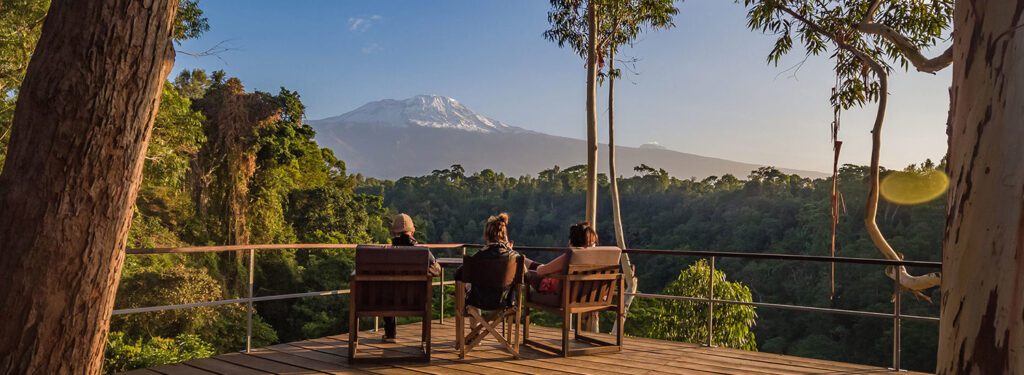
Aishi Machame Hotel
Aishi Machame Hotel is a quiet lodge surrounded by nature, making it a good option for acclimatizing and mentally preparing for the climb.
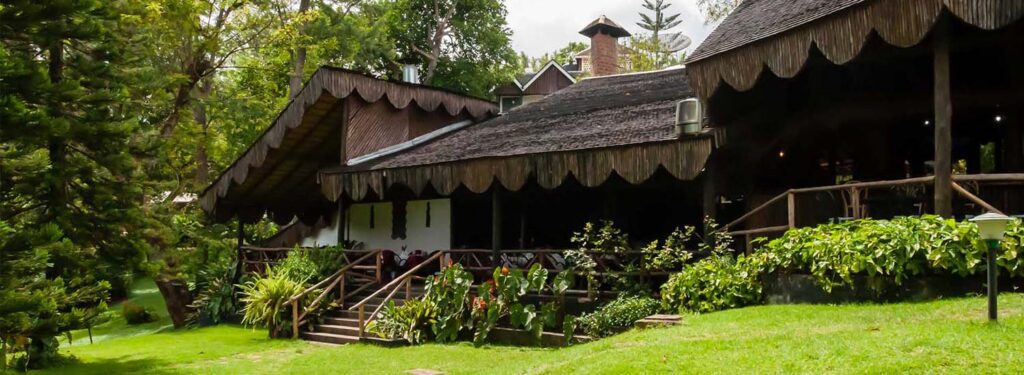
Chanya Lodge, Moshi
Chanya Lodge is comfortable, clean, and popular among climbers for both pre hike and post hike stays. It works especially well for practical itineraries with Moshi based logistics.
Why Safari Should Come After Kilimanjaro
For most travellers, safari after the climb is better than safari before the climb. The reason is simple. Kilimanjaro demands energy, discipline, and focus. Once the climb is complete, the safari becomes a reward.
After days of trekking, early starts, altitude changes, and summit effort, moving into a luxury safari rhythm feels deeply satisfying. You can sit back in a game vehicle, watch elephants, lions, cheetahs, giraffes, zebras, buffalo, and wildebeest, and let the wild unfold without needing to walk another steep trail.
This is where tanzania safari packages become valuable. The safari should not feel rushed after the climb. It should be paced to allow recovery, comfort, and high quality wildlife viewing.
Peak To Plains: Serengeti, Ngorongoro and Tarangire
After summiting, head toward Serengeti National Park or Ngorongoro Crater for your wildlife chapter.
Serengeti National Park
Serengeti National Park is the classic dreamscape of Tanzania. It is known for endless plains, lions, cheetahs, leopards, elephants, hyenas, giraffes, zebras, and the Great Migration. A serengeti safari is ideal after Kilimanjaro because it gives scale, movement, and deep wilderness.
A luxury serengeti safari can include elegant tented camps, fly in transfers, sunrise drives, and private guiding. For travellers coming from the US, the Serengeti is often the safari highlight of the entire journey.
Ngorongoro Crater
Ngorongoro Crater offers one of the most concentrated wildlife experiences in East Africa. Its dramatic crater floor is home to lions, elephants, buffalo, hippos, flamingos, hyenas, and the possibility of rhino sightings.
Pairing Serengeti with Ngorongoro Crater gives your itinerary both scale and density. The Serengeti shows the vastness of the wild. Ngorongoro shows the intensity of life within a natural amphitheatre.
Tarangire National Park
Tarangire is known for ancient baobab trees, large elephant herds, birdlife, and dry season wildlife concentrations. It is often included before or after Ngorongoro, especially in northern Tanzania safari tours.
For travellers who want variety, Tarangire adds texture before the Serengeti chapter.
See The Big Five and More
The Big Five remain a major reason travellers choose a Tanzania safari. Lions, leopards, elephants, rhinos, and buffalo all feature in the northern circuit, though sightings depend on region, timing, and luck.
Beyond the Big Five, Tanzania offers zebras, giraffes, wildebeest, cheetahs, hippos, crocodiles, hyenas, gazelles, warthogs, jackals, flamingos, eagles, and countless other species.
The best safari is not only about ticking a list. It is about watching behaviour: lions resting after a hunt, elephants guiding calves, cheetahs scanning the plains, wildebeest moving across the Serengeti, and vultures circling after predator action.
Best Season For Kilimanjaro And Tanzania Safari
The best time to visit Tanzania for a combined Kilimanjaro climb and safari is generally from July to October, when dry weather creates ideal trekking conditions and wildlife viewing is at its peak. January to March is another excellent travel window, especially for those who want to witness the Serengeti’s calving season alongside a successful Kilimanjaro climb. The ideal timing ultimately depends on whether your priority is the mountain, the safari, or extending your journey to Zanzibar.
July to October (Best Overall Time)
This is widely considered the best season for combining Kilimanjaro and a Tanzania safari. Dry weather makes trekking conditions more comfortable, while wildlife gathers around water sources, creating exceptional game-viewing opportunities across the country. During this period, the Great Migration may be active in the northern Serengeti, adding another unforgettable highlight to the journey.
As this is peak travel season, luxury lodges, safari camps, and Kilimanjaro climbing permits and guides should be booked well in advance.
January to March (Best for Calving Season)
This period is another excellent time to combine Kilimanjaro with a safari. Weather on the mountain is often favourable, while the southern Serengeti and Ndutu plains come alive with the Great Migration’s calving season. Travellers can witness thousands of newborn wildebeest, increased predator activity, and lush green landscapes, making it one of the most rewarding wildlife experiences in Tanzania.
November to December
The short rainy season transforms Tanzania into a vibrant green landscape with fewer visitors. Although occasional showers are expected, both Kilimanjaro trekking and safari remain enjoyable for travellers who have flexible itineraries and do not mind changing weather conditions.
April to May
These months mark Tanzania’s long rainy season. Heavy rainfall can make some safari roads difficult to navigate, and certain seasonal camps may close. While this period attracts fewer visitors and offers beautiful scenery, it is generally less suitable for travellers planning a combined Kilimanjaro climb and safari.
For most US travellers planning a luxury Kilimanjaro and Tanzania safari itinerary, July to October offers the best overall balance of weather, wildlife viewing, and climbing conditions, while January to March is the ideal choice for those wanting to experience the spectacular Serengeti calving season.
Recommended Safari Camps & Lodges
The existing lodge recommendations are strong and suitable for a premium Tanzania route.
Lemala Ngorongoro Camp
Luxury tents set in a forest near the crater rim, ideal for early morning access into Ngorongoro Crater. This is especially useful because early descent can improve the rhythm of the day.
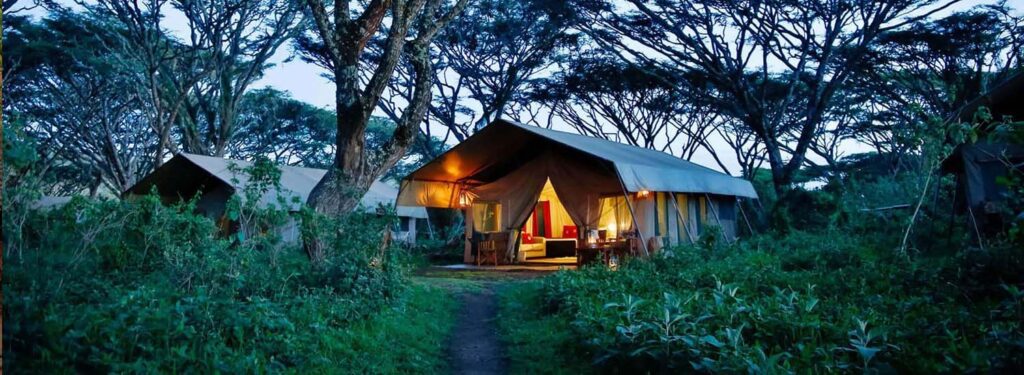
Kubu Kubu Tented Lodge, Serengeti
Kubu Kubu offers elevated views, stylish rooms, and a pool overlooking the plains. It works well for travellers who want comfort, scenery, and strong Central Serengeti access.
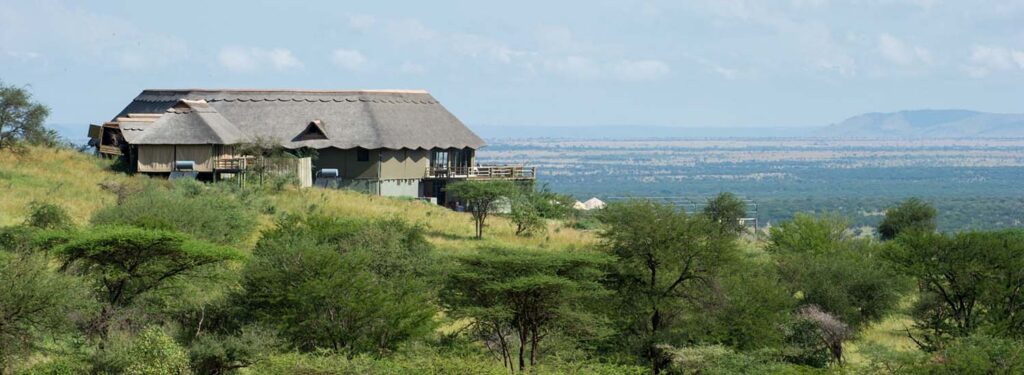
Serengeti Pioneer Camp (Elewana Collection)
Part of the Elewana Collection, Serengeti Pioneer Camp offers old world safari charm and strong wildlife access. It suits travellers who want a classic safari atmosphere with refined service.
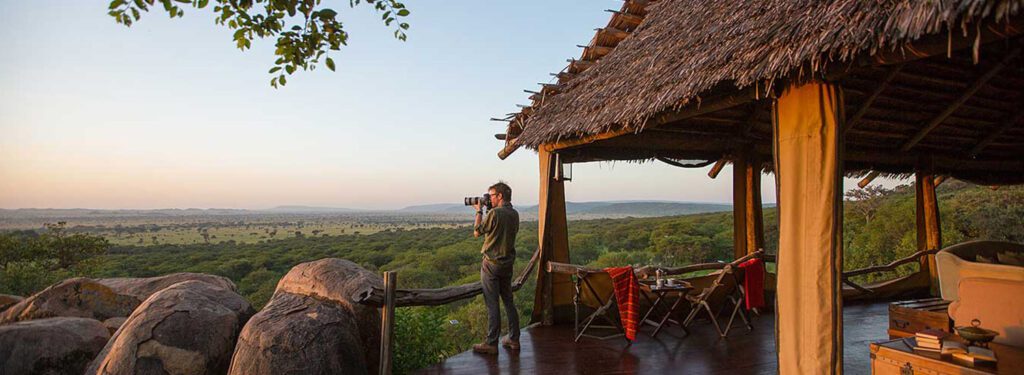
Ole Serai Luxury Camp
Located in Central Serengeti, Ole Serai Luxury Camp offers strong service and game viewing close to camp. It works well for a luxury tanzania safari package with classic Serengeti access.
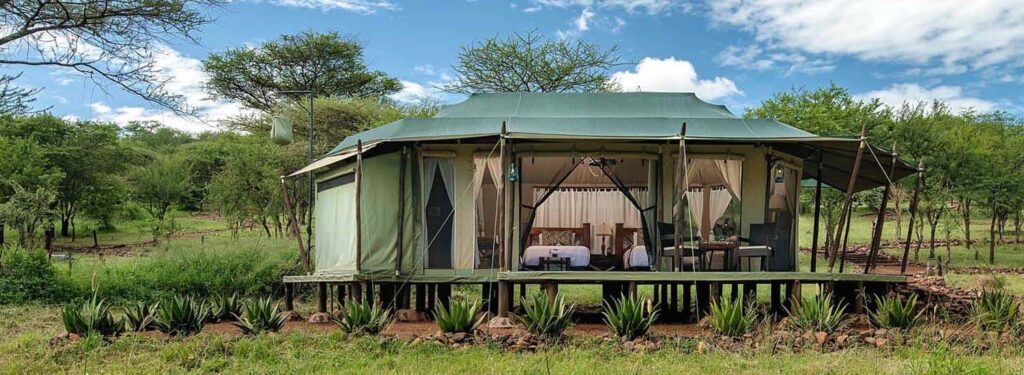
Suggested 14 Day Kilimanjaro, Safari And Zanzibar Itinerary
A full journey from the US should not be rushed. A 12 to 14 day route gives enough time to climb, recover, enjoy safari, and end by the coast.
Day 1: Fly From The US To Tanzania
Depart from a major US gateway and connect through Amsterdam, Doha, Istanbul, Addis Ababa, or another international hub depending on airline routing.
Day 2: Arrive At Kilimanjaro International Airport
Arrive at JRO, meet your local representative, and transfer to Moshi or Arusha. Rest, hydrate, and prepare for the climb.
Day 3 To 9: Climb Kilimanjaro
Choose Machame, Lemosho, or Marangu depending on fitness, comfort, and acclimatization preference. Lemosho over 8 days or Machame over 7 days is often better for travellers who want more gradual altitude adjustment.
Day 10: Recover In Arusha Or Moshi
After the climb, enjoy a rest night. This helps your body recover before safari travel.
Day 11: Ngorongoro Crater
Travel to Ngorongoro and prepare for a crater game drive. Depending on timing, you may overnight near Karatu or at a crater rim camp.
Day 12 To 13: Serengeti National Park
Fly or drive into Serengeti National Park for game drives, big cats, plains wildlife, and classic safari landscapes. Choose the region based on season.
Day 14: Fly To Zanzibar Or Return Home
If time is short, return to Arusha for your international connection. If you can extend, fly to Zanzibar for 3 to 4 nights.
Travel Tips For US Visitors
Flights And Airport
Most US travellers fly into Kilimanjaro International Airport, known as JRO, through international hubs such as Amsterdam, Doha, Istanbul, Addis Ababa, or similar routes.
Visa
US tourists must obtain the appropriate Tanzania visa. The US State Department states that tourists need a visa and can apply online for an eVisa in advance, while US citizens can also obtain a tourist visa upon arrival. Passports should have at least six months validity and at least one blank page.
Tanzania’s official eVisa guidelines also advise applicants to use the official immigration website and ensure passport validity of at least six months with an unused visa page.
Health Guidelines
Health requirements can change, so US travellers should check CDC guidance and speak to a travel medicine professional before departure.
The CDC notes that yellow fever vaccine is generally not recommended for direct travel to Tanzania, but country entry requirements apply for travellers arriving from countries with yellow fever risk.
The Tanzania Embassy in Washington states that proof of yellow fever vaccination is required upon arrival if travelling from a country with risk of yellow fever.
Stay up to date with routine vaccines. Discuss Hepatitis A, Typhoid, Tetanus, malaria prevention, altitude medication, and traveller’s diarrhea preparation with a qualified clinician. Bring mosquito repellent with DEET or another recommended repellent, especially for evenings in lowland areas.
Carry basic medicines such as paracetamol, stomach medication, blister care, electrolyte sachets, and any personal prescriptions.
Packing Tips For Kilimanjaro And Safari
Packing for both mountain and safari requires balance. Kilimanjaro needs technical layers. Safari needs comfort, neutral tones, and sun protection.
For The Climb
- Layered clothing
- Base layers
- Fleece or insulated jacket
- Waterproof shell
- Warm hat and gloves
- Good hiking boots
- Headlamp
- Trekking poles
- Hydration system
- High SPF sunscreen
- Duffel bag suitable for porters
For Safari
- Neutral outfits
- Light jacket for morning drives
- Wide brimmed hat
- Sunglasses
- Binoculars
- Camera and extra batteries
- Comfortable shoes
- Dust protection
- Small day bag
For Zanzibar
- Light resort wear
- Swimwear
- Sandals
- Reef safe sunscreen
- Light cover ups
- Travel adaptor
Tanzania Safari and Zanzibar Extension
One country, three epic experiences: Kilimanjaro, safari, and Zanzibar.
A Tanzania safari and Zanzibar combination is the perfect way to soften the journey after a mountain climb and wildlife adventure. Zanzibar gives you warm beaches, turquoise waters, coral reefs, spice farms, and the historic streets of Stone Town.
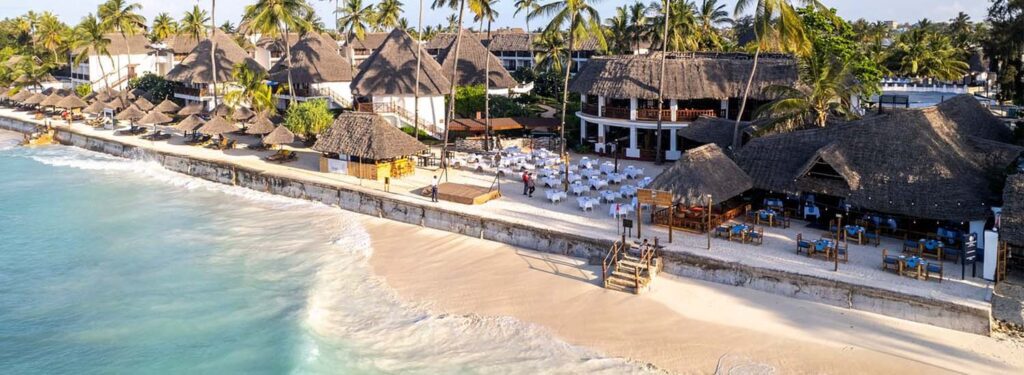
Nungwi Beach
Known for clear water, beautiful sunsets, and a lively coastal atmosphere, Nungwi is ideal for travellers who want beach time with energy.
Prison Island
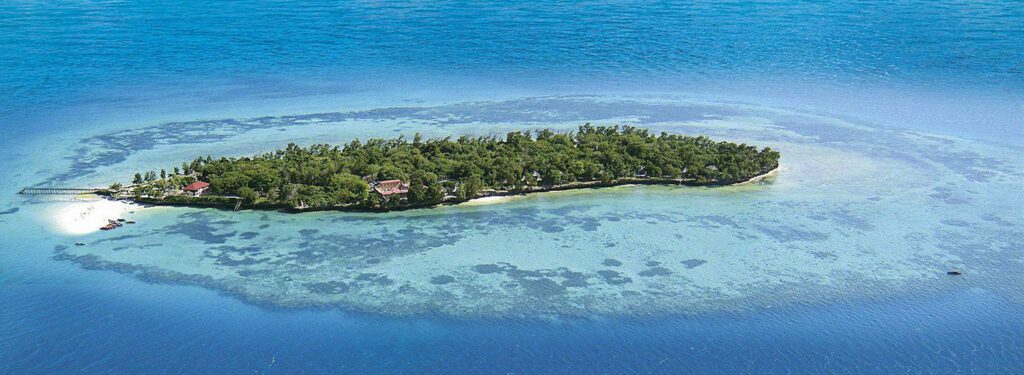
Visit giant Aldabra tortoises and snorkel in coral rich waters. It is a popular half day excursion from Stone Town.
Spice Farms
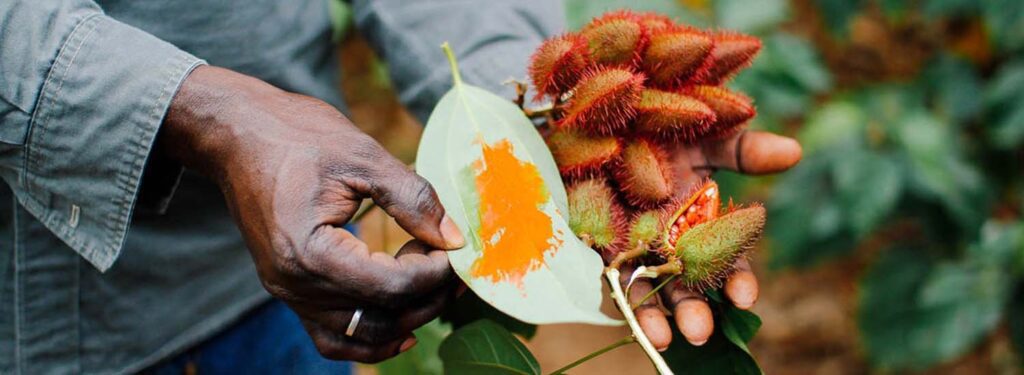
A guided spice farm tour lets you see, smell, and taste Zanzibar’s cloves, cinnamon, vanilla, nutmeg, and other spices that shaped the island’s identity.
For honeymooners, Zanzibar is a natural ending. For families, it gives children space to relax after safari. For adventure travellers, it completes the mountain to plains to ocean journey.
Let Scarface Pride take you beyond the ordinary—book your Tanzanian safari tour now and experience Africa’s untamed beauty, from mountain peak to ocean breeze.
What Affects Tanzania Safari Cost For This Trip?
The Tanzania safari cost for a combined Kilimanjaro climb, wildlife safari, and Zanzibar holiday typically ranges from USD 6,500 to USD 18,000+ per person for a well-planned luxury itinerary. The final price depends on several factors, including the climbing route, safari duration, accommodation standard, internal flights, and level of personalization.
The main cost drivers include:
- Kilimanjaro route length
- Climb operator quality
- Number of safari days
- Luxury level of camps
- Private vehicle versus shared vehicle
- Domestic flights
- Season of travel
- Zanzibar extension
- Park and conservation fees
- Special experiences
Luxury tanzania safari packages cost more because they often include premium camps, private guides, fly in routing, high level service, and more seamless logistics. For US travellers investing in a once in a lifetime journey, the key is to avoid under planning the transitions between climb, safari, and coast.
Who is this Trip Best For?
This journey is ideal for:
- Adventure travellers
- Couples and honeymooners
- Families with older children or teens
- Fitness focused travellers
- First time safari in Africa guests
- Wildlife photographers
- Luxury travellers
- US travellers wanting one big East Africa journey
It may not be ideal for travellers who want only relaxation or who have very limited time. Kilimanjaro plus safari requires stamina, time, and careful pacing.
Why Book With Scarface Pride?
Scarface Pride brings the mountain, safari, and coast together with expert planning. Instead of treating Kilimanjaro, Serengeti, Ngorongoro, and Zanzibar as separate pieces, the journey is designed as one complete Tanzania experience.
With Scarface Pride, you can plan:
- Kilimanjaro route selection
- Pre and post climb stays
- Private safari Tanzania planning
- Serengeti safari packages
- Ngorongoro Crater extensions
- Luxury camp selection
- Zanzibar beach add ons
- Airport transfers and internal logistics
- Safari pacing for recovery after the climb
The result is a journey that feels ambitious but seamless.
FAQ’s
1. Can US travellers combine Kilimanjaro and a Tanzania safari in one trip?
Yes. Many US travellers combine Mount Kilimanjaro with Serengeti National Park, Ngorongoro Crater, Tarangire, and Zanzibar in one well planned itinerary.
2. How many days do I need for Kilimanjaro, safari and Zanzibar?
A 12 to 14 day trip works well for Kilimanjaro plus safari. Add 3 to 4 extra nights if you want a relaxed Zanzibar extension.
3. Which Kilimanjaro route is best for acclimatization?
The Lemosho Route over 8 days and the Machame Route over 7 days are popular choices because they allow better acclimatization than shorter routes.
4. Should I do safari before or after Kilimanjaro?
Safari after Kilimanjaro is usually better because the climb requires energy and focus. The safari then becomes a comfortable reward after summit effort.
5. What is the best time to visit Tanzania for safari and Kilimanjaro?
July to October and January to March are strong periods for combining Kilimanjaro and safari. July to October is dry and strong for migration viewing, while January to March is excellent for calving season in the southern Serengeti.
6. Do US citizens need a visa for Tanzania?
Yes. US citizens need a Tanzania visa and can apply online for an eVisa in advance. Visa on arrival may also be available, but checking current requirements before travel is important.
7. Can I add Zanzibar after my Tanzania safari?
Yes. Zanzibar is one of the best ways to end the journey, especially after Kilimanjaro and safari. It adds beaches, Stone Town, spice farms, snorkeling, and ocean relaxation.